A recap of our latest workshop night
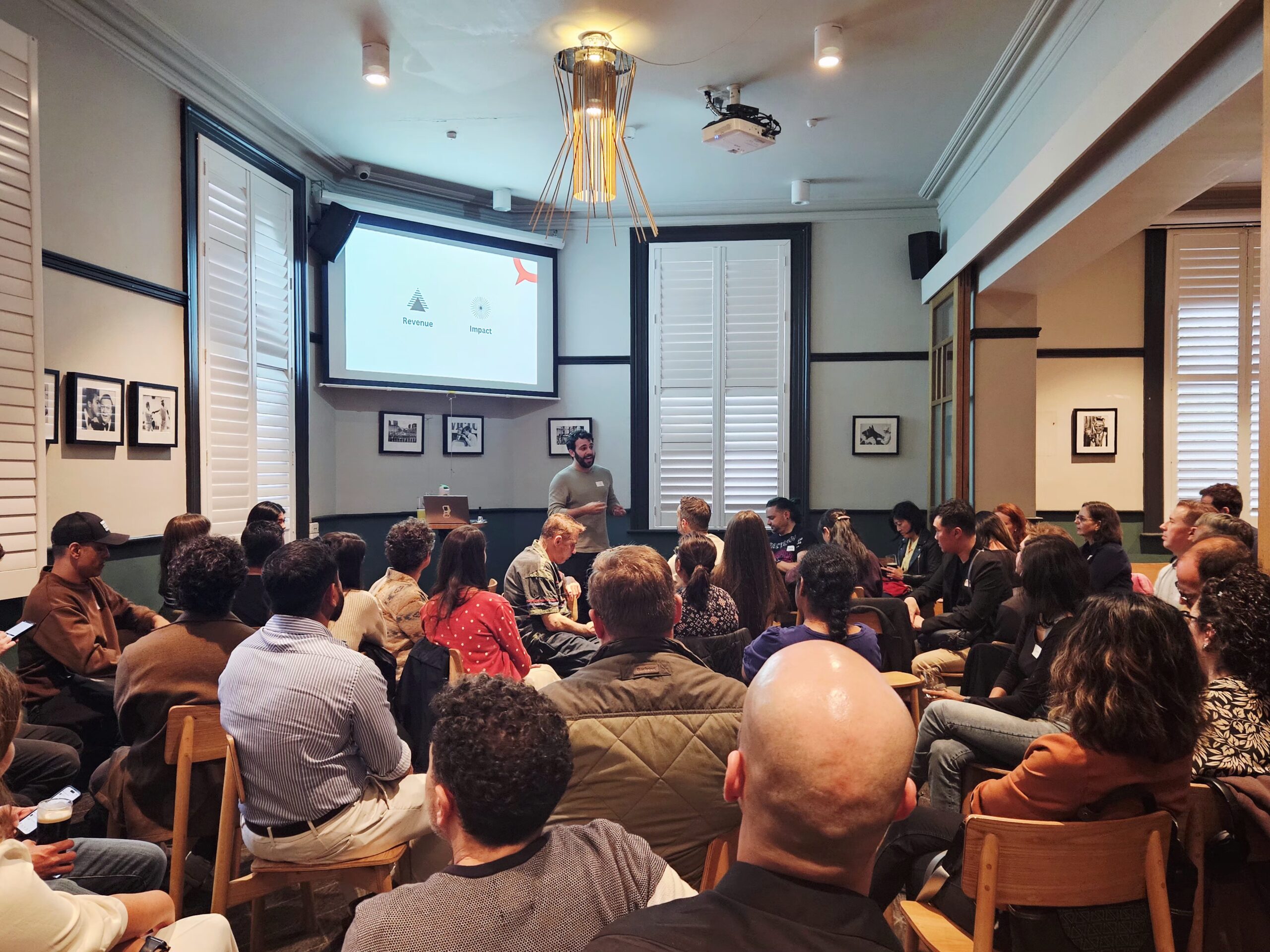
Last month we ran a workshop with a name we couldn’t quite put on the public event listing. “What the F**k is Impact” is a provocative title — but as presenter JJ Monester made clear from the opening minute, it’s an honest one. Because when you really start pulling at the thread of what impact means, how it’s formed, and how it’s measured, you quickly discover that almost no one has a satisfying answer. And that’s exactly why it’s worth a room full of product people spending an evening on it.
Setting the scene
JJ comes at this topic from an interesting vantage point. He works at The Conversation — a not-for-profit news media organisation where academics write evidence-based content, and editors translate it into something the rest of us can actually read. With over 220,000 articles published across 11 global editions, approaching 6 billion reads, and around 110,000 academics published, The Conversation is genuinely trying to democratise knowledge at scale.
But being a not-for-profit means operating with two goals instead of one. Most organisations can point to a North Star metric — user retention, revenue growth, conversion — and orient the whole team around it. Not-for-profits have to balance that commercial reality against a harder question: are we actually making a positive difference in the world?
JJ framed it this way: imagine riding a horse with impact on one rein and revenue on the other. Pull too hard in either direction and you crash. The skill — and the challenge — is the balance.
That balance became very concrete when JJ was tasked with improving member retention for The Conversation’s university partnerships. Universities from around the world had completely different structures, priorities, and ways of measuring the value of their research. In the UK, the Research Education Framework ties how universities report research impact directly to tens of billions of dollars in public funding. Impact, it turns out, isn’t just a feel-good concept for these institutions — it’s a bottom-line metric they have to prove to keep the lights on.
That discovery sent JJ deep down a rabbit hole. And rather than keep the rabbit hole to himself, he built a workshop around it.
The activity: mapping impact for a fake company
After a grounding video from the Impact Management Platform — a UN and OECD-backed initiative to create shared language around impact for sustainable development — groups were handed a fictional company and a big sheet of paper.
The task: map out inputs, outputs, business activities, and the value being created or eroded. Two questions anchored it: What’s the traditional North Star metric for this business? And: What could impact actually look like here?
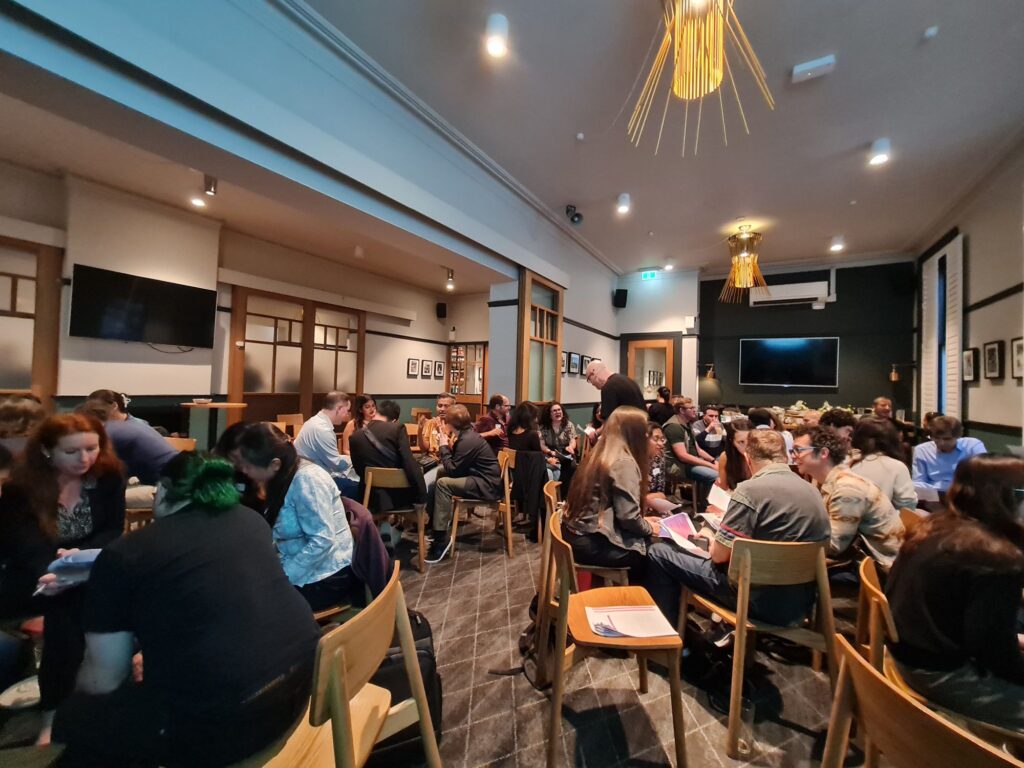
Two groups shared back at the end of the session.
BulkBreed Energy — a fictional smart energy and green optimisation platform with around $380M in revenue and engineering teams across Berlin and Austin — started where most companies do: revenue. But as the group worked through the mapping exercise, a richer picture emerged. Reduced waste. Increased renewable energy adoption. Lower electricity bills for consumers. Reduced pollution. But also: potential unemployment in mining towns as traditional energy sources wind down. Their overall impact statement landed somewhere honest and ambitious — better for people, better for customers, better for the world — while acknowledging that “better” isn’t always straightforward.
Atlas Freight Systems — a fictional SaaS platform for global logistics optimisation — found that complexity quickly multiplied. Their North Star was a universal freight platform that delivers everything on time and on budget. Clean enough. But once they started mapping, the picture got messy in interesting ways. Inputs covered workforce on both the tech and freight sides, physical materials, and time. Activities included navigating relationships with governing bodies across multiple jurisdictions. Outputs were primarily their SaaS platform — with secondary outputs including freight movement itself, and all the waste that comes with it.
The impact layer was where things got genuinely uncomfortable in the best way. Atlas could create positive environmental outcomes. Or significant negative ones. Spoiled freight, missed shipments, delayed supply chains — each one a potential value-eroding event. The group landed on customer satisfaction and environmental value creation as key measures, while honestly acknowledging that almost every impact dimension could tip either way depending on execution.
The question to take home
JJ closed with a provocation worth sitting with.
In 1970, Bhutan decided not to measure national progress by GDP alone. They created Gross National Happiness — nine categories, full measurement infrastructure, national surveys — and have used it as a legitimate alternative metric ever since.
If an entire country can build a framework for something as complex and contested as happiness, what’s stopping your organisation from getting more intentional about impact?
The ask wasn’t grand. JJ put it simply: if you leave this session and ask yourself just one question you weren’t asking before — What is my product doing in the wider world? Who does it influence? What value is it creating? — then the night was a success.
Thanks to JJ for bringing the rabbit hole to us. Resources from the session can be found in the reading.
Thank you to our sponsors!!
Thank you Revity & Amplitude for teaming up to support this community!
Amplitude: We help companies build better products.
We help companies unlock the power of their products.
Join the team.
Join the community.
Join our user groups.
Revity helps startups, scaleups and established organisations deliver product-led quality software outcomes.
We partner with businesses to build high-performing teams, uplift engineering capability, and deliver product outcomes that last beyond the project. From applied AI and mobile apps to global expansion and customer lifecycle platforms, we focus on practical, scalable solutions that drive business value. At Revity, we don’t just deliver projects, we empower teams to learn by doing, so organisations grow stronger with every engagement