
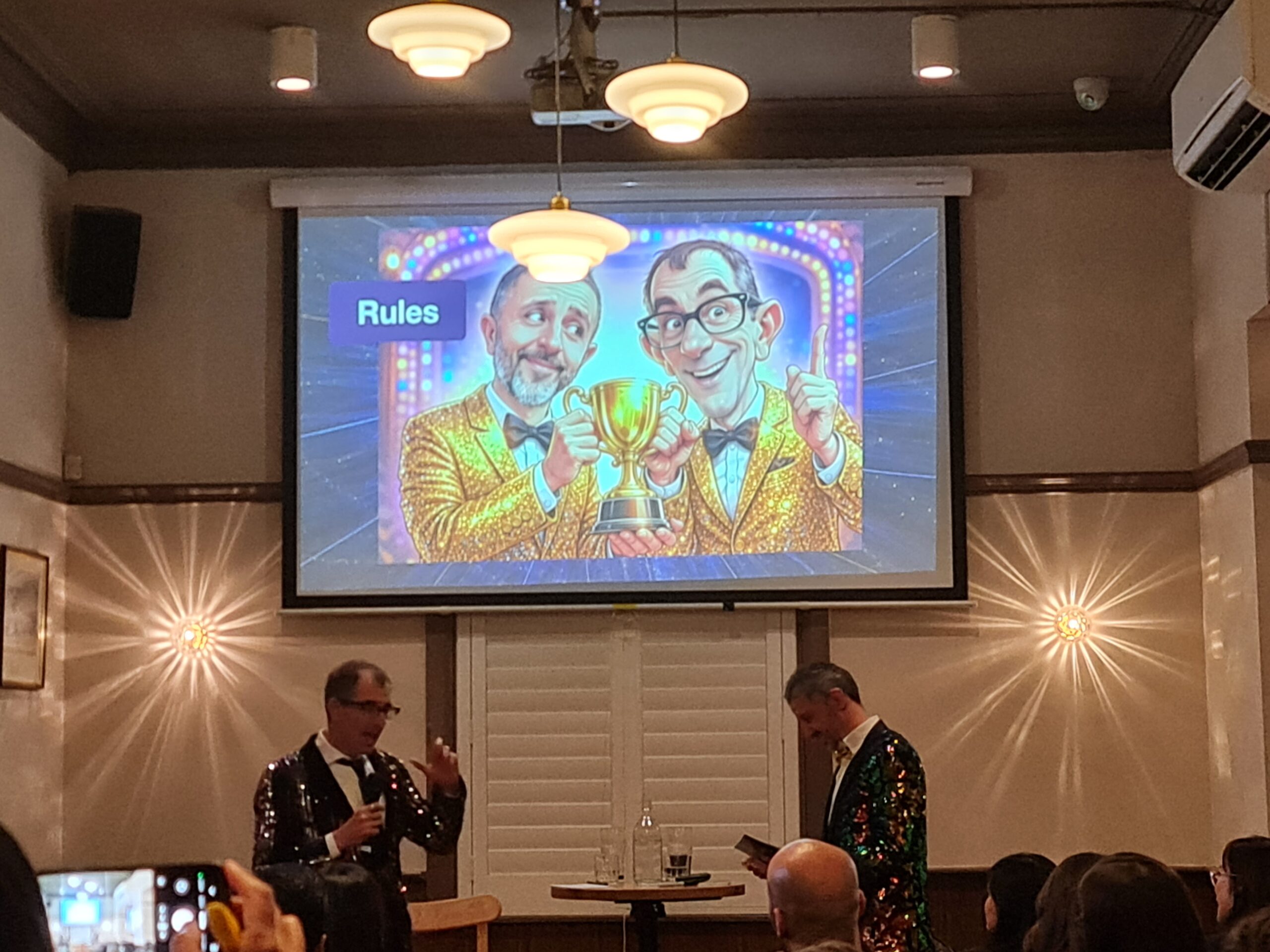
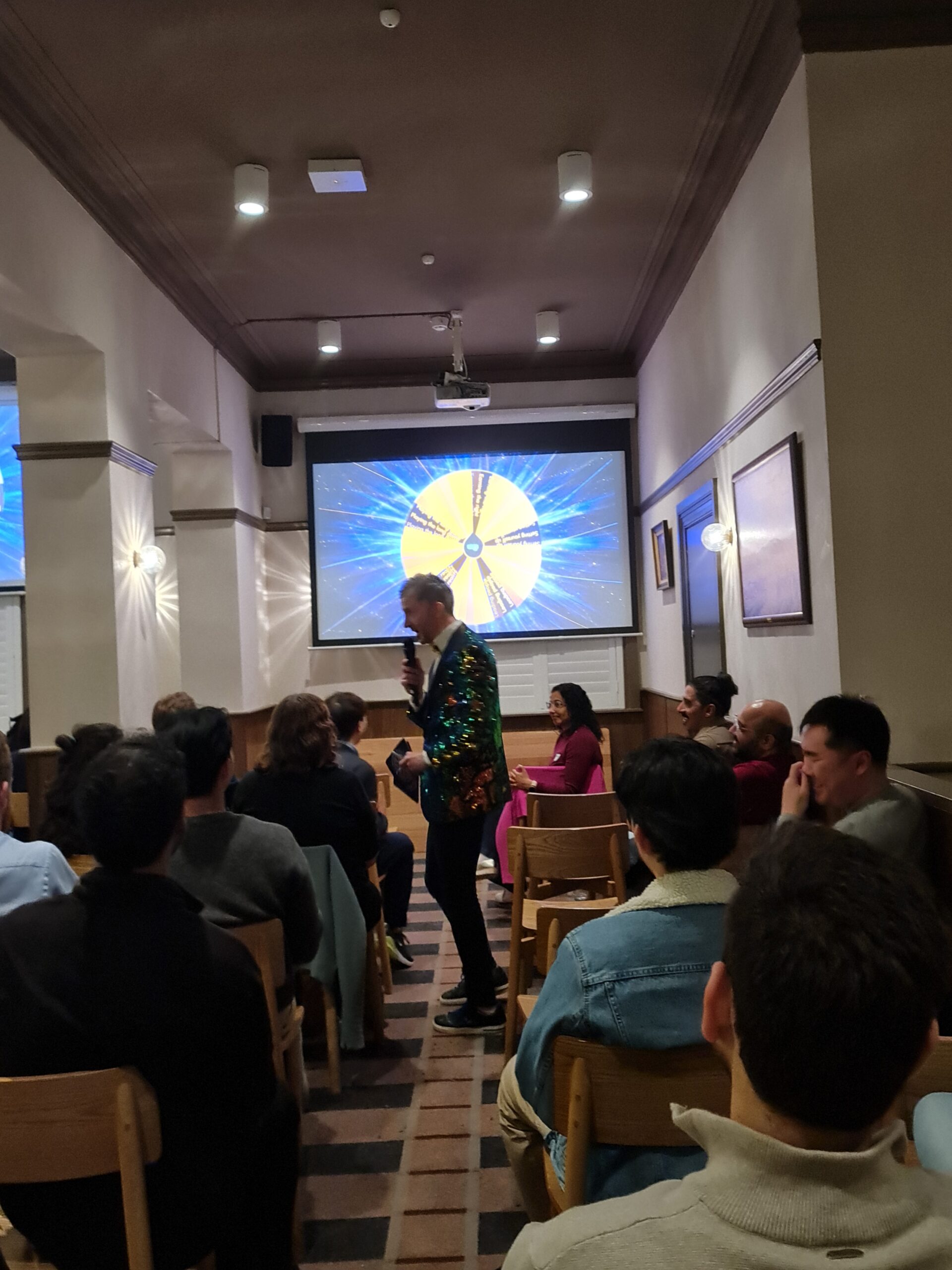
There’s a saying that good judgment comes from experience, and experience comes from bad judgment. At our last event, Dave and Amir leaned into that idea – hard. Hosted as a game show loosely based on Who Wants to Be a Millionaire, they spun a wheel, pulled audience members up as contestants, and used the chaos to share some of the most honest leadership stories we’ve heard on a Product Anonymous stage.
Here’s what came out of it.
Earn the Right
Product people are opinionated. We’ll swim in anyone’s lane – engineering, leadership, customer experience – and we have thoughts we’d like to share. The problem isn’t the opinions. It’s the timing.
Both Dave and Amir had stories about arriving somewhere new with ideas, and learning the hard way that credibility isn’t assumed – it’s accumulated. The concept they came back to: idiosyncrasy credits. Deliver consistently, meet expectations, make the people around you look good – and you build up the right to eventually push back, deviate, and step outside your lane. Skip that step, and nobody’s listening anyway.
Set Yourself Up
Dick Fosbury revolutionised the high jump by going over the bar backwards, head first, not seeing where he’d land. What made that possible wasn’t just the idea – it was that his school had just introduced foam landing mats.
Bold moves require crash mats. Amir had a vivid story about needing to challenge a major decision that had already been signed off at C-level – and the quiet, patient groundwork he had to lay before he could make that case without torching his credibility or his career.
The lesson: it’s not the boldness that works. It’s the preparation that makes the boldness survivable.
Shoe Maintenance
If you’re walking down the street and step in dog shit, how do you react? Because as a leader, you’re going to be stepping in a lot of it.
Many product people treat dealing with mess as a distraction from the real job. Dave’s point was simple: dealing with mess is the job. We’re drawn to an idealised version of leadership – vision, strategy, craft. Most of the time it’s closer to garbage collection. The sooner you make peace with that, the better a leader you’ll be.
Lead the Humans, Not the Projects
Products fail. Companies get acquired. Strategies get shelved. After 25-plus years, Amir’s conclusion is that almost everything you deliver is temporary – except the people you help grow.
Dave told a harder story about a redundancy round, and what happened in the hours after he’d delivered the news. The idea he landed on: leadership shadow. Everything you do and say casts a shadow across your team – your standards, your values, how you treat people on the way up and on the way out. It accumulates quietly, over dozens of interactions. And sometimes it comes back to you in ways you don’t expect.
Play the Long Game
Dave got his Miro year-in-review: top 1% of users. He assumed the most-used feature would be Post-it notes or user flows.
It was tables.
He’d become what he’d sworn to destroy – and then made peace with it. Leadership runs on data, budgets, capacity planning, and the unglamorous work that keeps things moving. Stanford professor James G. March called it poetry and plumbing: most people who want to be leaders are drawn to the poetry, but most people who are leaders spend the majority of their time in the plumbing. The best ones aren’t too proud to do either.
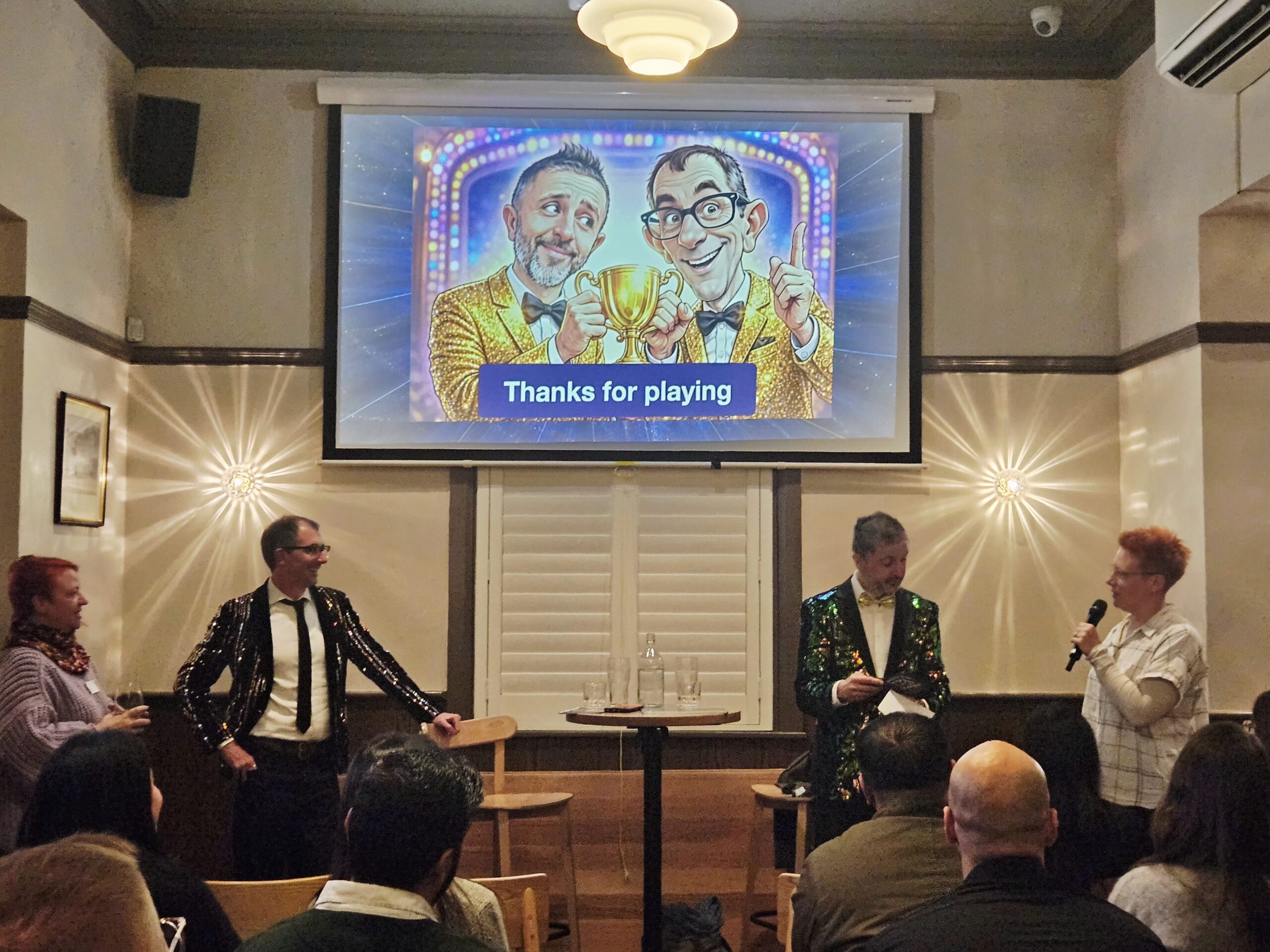
Thanks to Dave and Amir for bringing both the stories and the game show energy. And to our five brave participants – Lisa, Pranav, Jaden, Kate, and Malay – for being good sports.
Our Speakers:
Amir Ansari: With over 25 years’ of experience in the field of design and design leadership, Amir has worked across the private and public sectors, in-house and agency, managing design practitioners and leaders to build long-lasting and impactful products and services. Amir is passionate about democratising the craft of design and sharing his learnings – doing it with a smile and a hug.
David Bacon: After graduating from Monash with a Bachelor of Science, David worked as a penguin keeper in England which somehow led to a career spanning marketing, behaviour change, innovation and human-centred design. David has experience delivering digital products and services in financial services, healthcare, retail, government. He has the goal of weaving humanity into technology. He still dreams about penguins.