For July, we had 4 amazing individuals share their knowledge via short talks!
If you’re interested in doing a talk at ProdAnon, we typically do a session like this 1x a year so reach out. AND there is always Product Camp too!
Hello From the Other Side – Ana Rowe
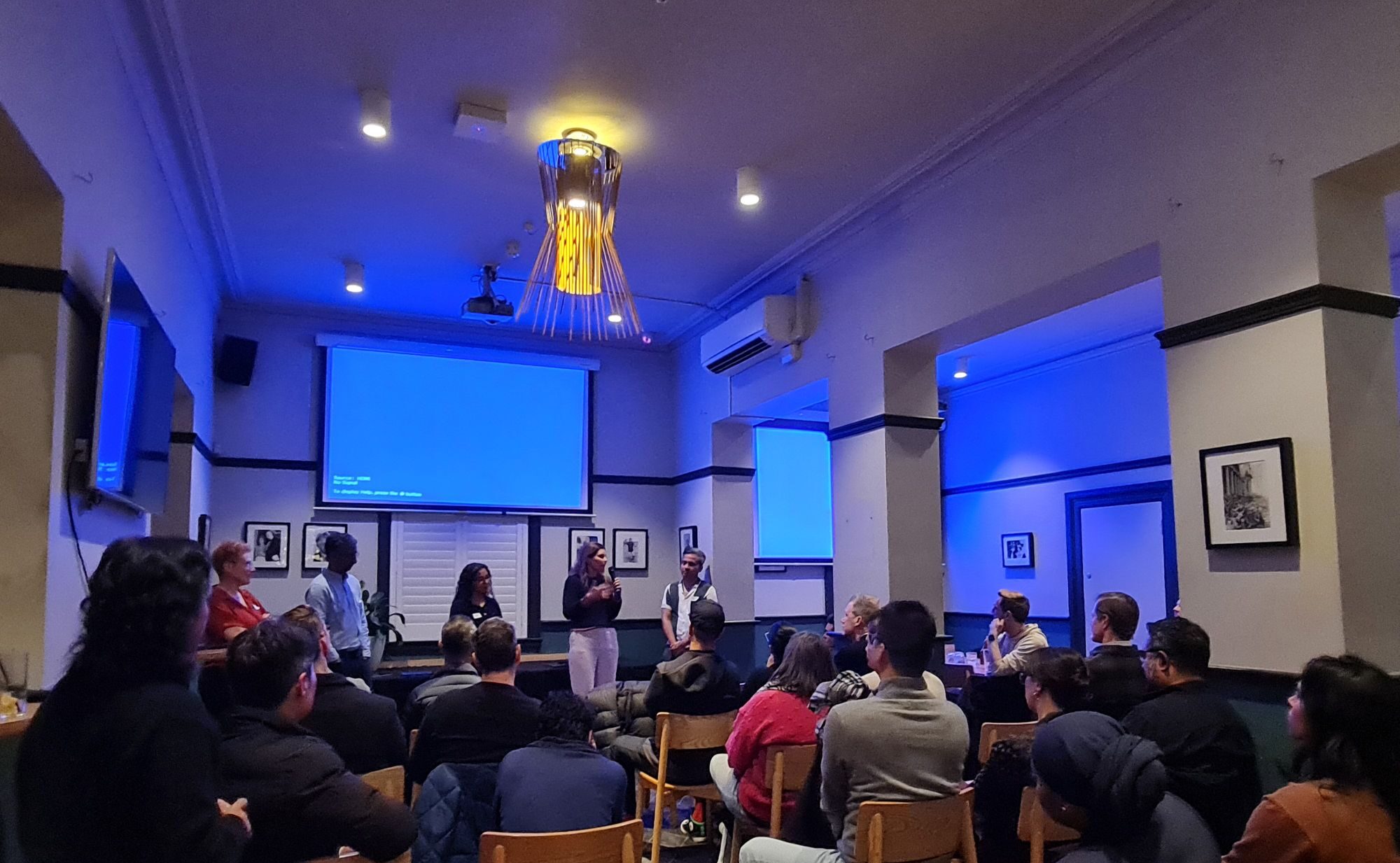
Product Managers often say the C level just doesn’t understand – so what does it look like when you reach that level and the tables are turned? What does the C level want to see from product? Ana moved from Product to COO and gave us this low down.
While PMs often feel misunderstood and a disagreement on a roadmap can sometimes feel like a personal attack, Ana says we need to remember an executive is constantly trying to balance short term survival with long term growth. Do we grow? Where do we invest? Where do we cut? Do we do this thing now? – are some of the questions going through their minds.
How you can help is to have a product strategy which has the that balance & shows you understand both short and long term goals. And of course your outcomes need to be aligned to the business goals. Those short term wins are what fund the long term strategy.
You need to have both clarity & confidence when it comes to research – both in understanding why it’s needed and what the results show.. Don’t just provide a report or data. Make sure you’re clear why are you dong the research, what opportunities you are unlocking, what are the risks are you’re trying to in/validate. Frame your research as minimising risk and driving growth.
People at the exec level are thinking at a different levels than product – they need to be thinking about budgets, talking to investors & analysts. They want to make sure the vision is being executed – but they do not need to be in the weeds for this. As the PM, you’ve been hired to be in the weeds. You have the detail but need to translate it to ‘why now’ instead of your usual ‘how’ thinking. As a PM, make sure you transfer the product strategy into business impact. Communicate why from the lens of customers, the market, sales, ROI, this the most important thing we should be doing. Knowing the entire business is helpful with this (be interested in financials, talk to other departments).
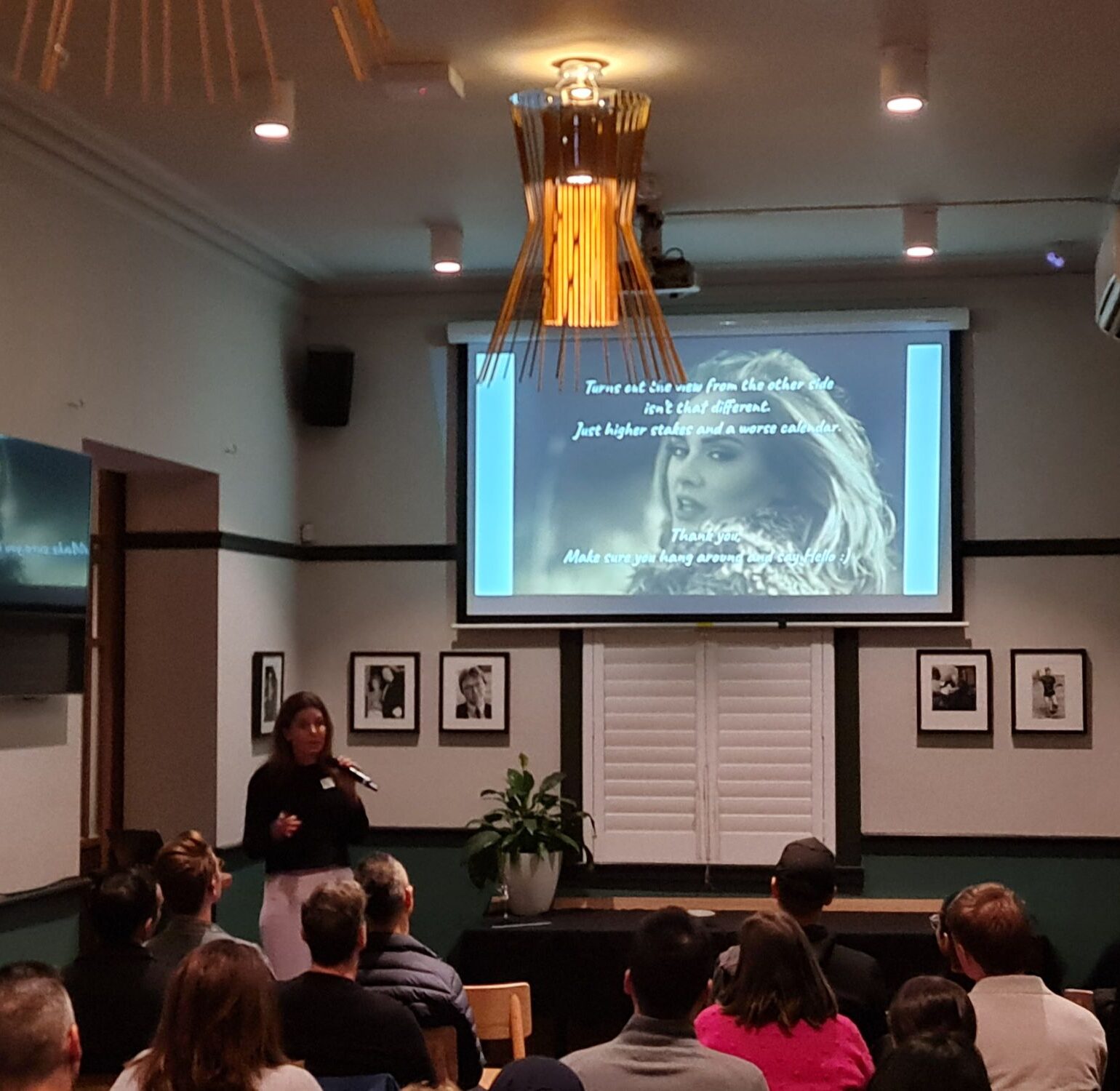
Product managers often joke that execs come up with pet projects and “dumb ideas”. You know the conversation – when someone has read a blog post or heard about something another company is doing or just had a shower idea that you think is ‘dumb’.
If this happens, ask yourself – if my strategy is strong why are they coming up with something new? Use those ‘dumb idea’ conversations as a SIGNAL. Consider this as a symptom of a shift, or something going wrong – especially when YOU think there’s already a good roadmap
Is there a low confidence in the current strategy, or your roadmap simply didn’t hit the mark? Or maybe they have some information you haven’t received yet, like a market shift for example. It’s your chance to shine. Use the exchange to understand where they are coming from and lean into your problem discovery skills. See if your current strategy already addresses it, and if you can accommodate testing and validating the idea. It’s a great opportunity to strengthen the relationship with your exec.
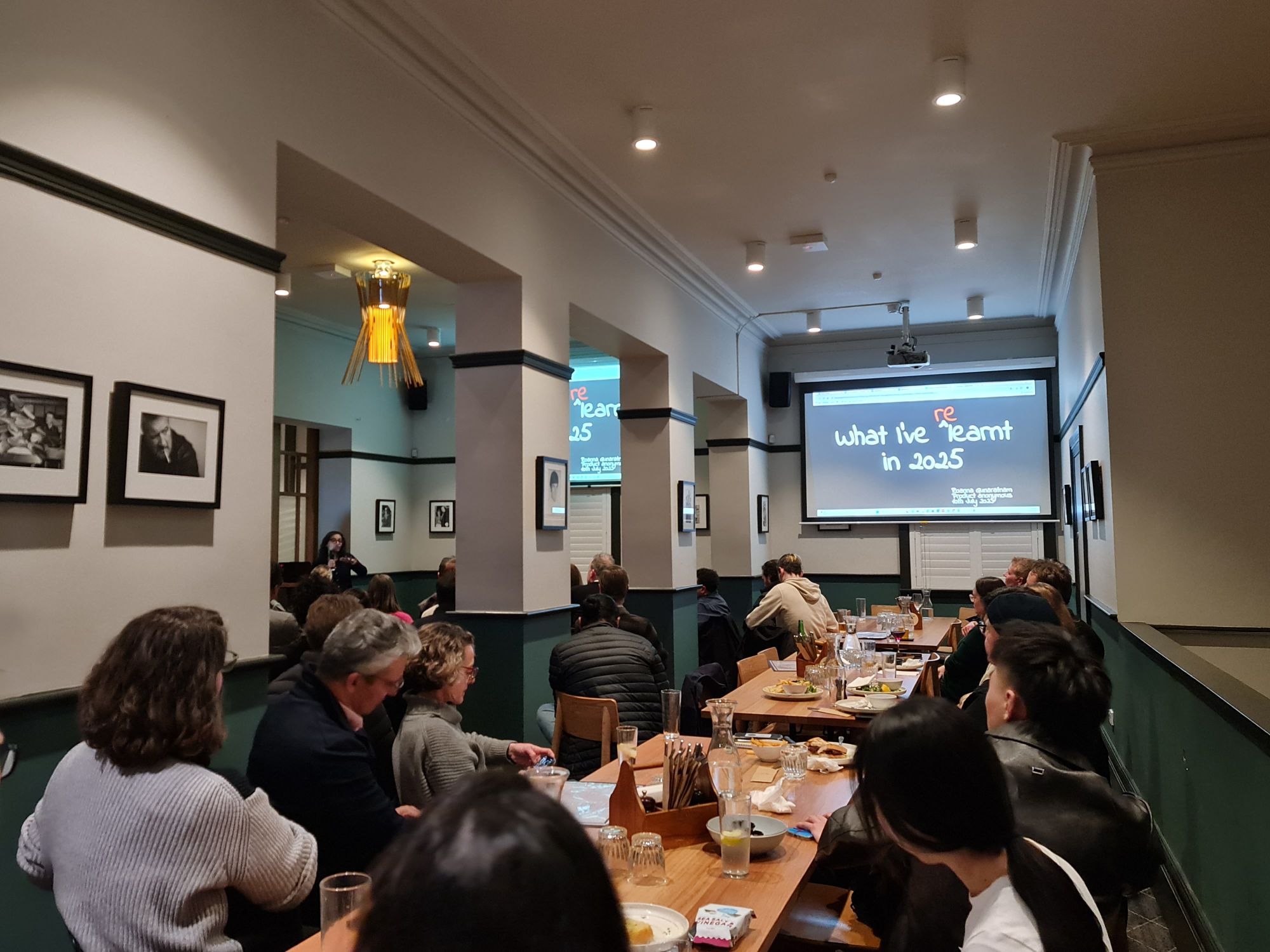
Top (2025) Lessons – Roanna Gunaratnam
PMs have to keep learning and sometimes you need to re-learn.
Roana reflected on the ‘invisible work’ which defines a veteran PM’s career. Success in our field is often silent because if you are doing well at your job, everything looks effortless, chaos is kept at bay and all goes well. For example, who really sees the effort that goes into having that roadmap? Who sees all the conversations and market research? The internal conversations & alignment? The stressing over how to put together a good workshop?
So then, how do you measure your success and growth?
Consider:
- Ditch the vanity metrics. Just like we do with products, don’t measure your value with vanity metrics like how many slack emojis your post got. Measure it by whether the team is moving faster and if customers are ‘less unhappy’
- Lean into your spectrum. Product management is not just one role but a whole spectrum of activities such as strategy, technical depth or SME knowledge.
- Let go. You can’t and should not control everything. You need to let the team make a mistake and recover from it. (queue the song from Frozen)
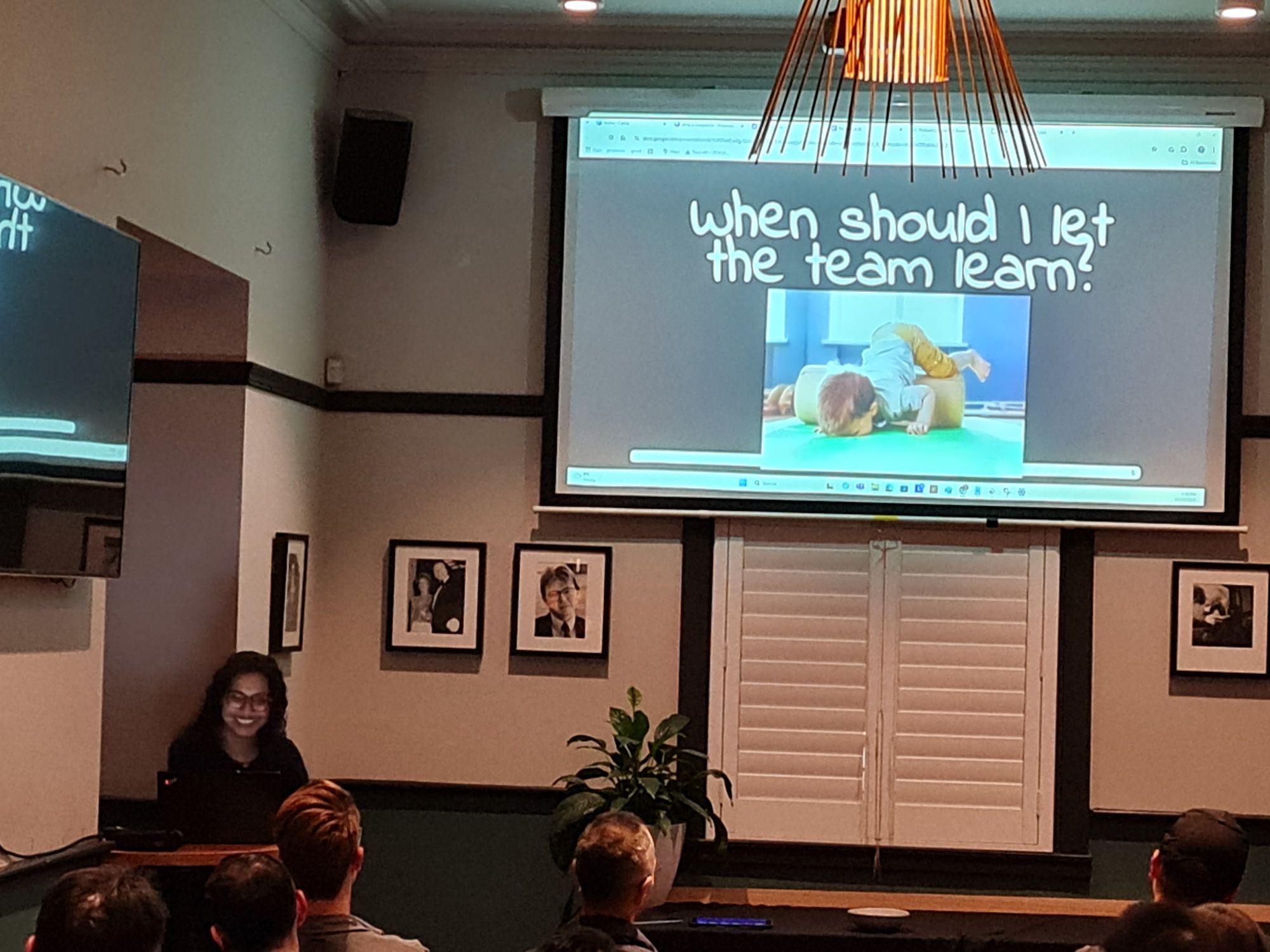
When you have that imposter syndrome (which we all do…) because someone else has better tech understanding or someone makes amazing decks or someone else has tons of domain knowledge when you’re new – lean into your super powers. Learn what your strengths. Ro talked about realising she enjoys and is good at strategy and having clarity when under pressure. Leaning into those skills made her job more enjoyable.
As a product person, you have to lean into leadership no matter what and one of her re-leaned lessons was stepping back and letting the team make a mistake (and recover from it). Now the team has learnt that & as the product manager she’s seen the team grow.
Ro closed by saying that product management is like parenting. You are the one holding the tension between ‘now’ and the ‘later’. You are the one between chaos and clarity. While it can be a thankless job, being the person who understands the full picture is your ultimate superpower.
Taste, Trust and Craft – Jithesh Ramesh
Like so many of us, Jithesh is learning and reflecting on using ai, including how it impacts society. Especially when we’re in this early stage of something, questions are important. In product, we try to stay in the question space and not jump to solutions right away so this should be a comfortable space for us. It’s in the questions that Jithesh focused this talk.
This talk was inspired by building ai features into products & his thoughts of their impact on society with the purpose of us asking questions of ourselves and teams. While Ai can synthesis research and help to speed up thinking, it cannot replicate the human ‘lived experience’ that informs tasteful design.
Jithesh started by asking us to quickly ask our favourte LLM to create a presentation on the same topic so we could later compare & contrast what it got right – and what it was missing.
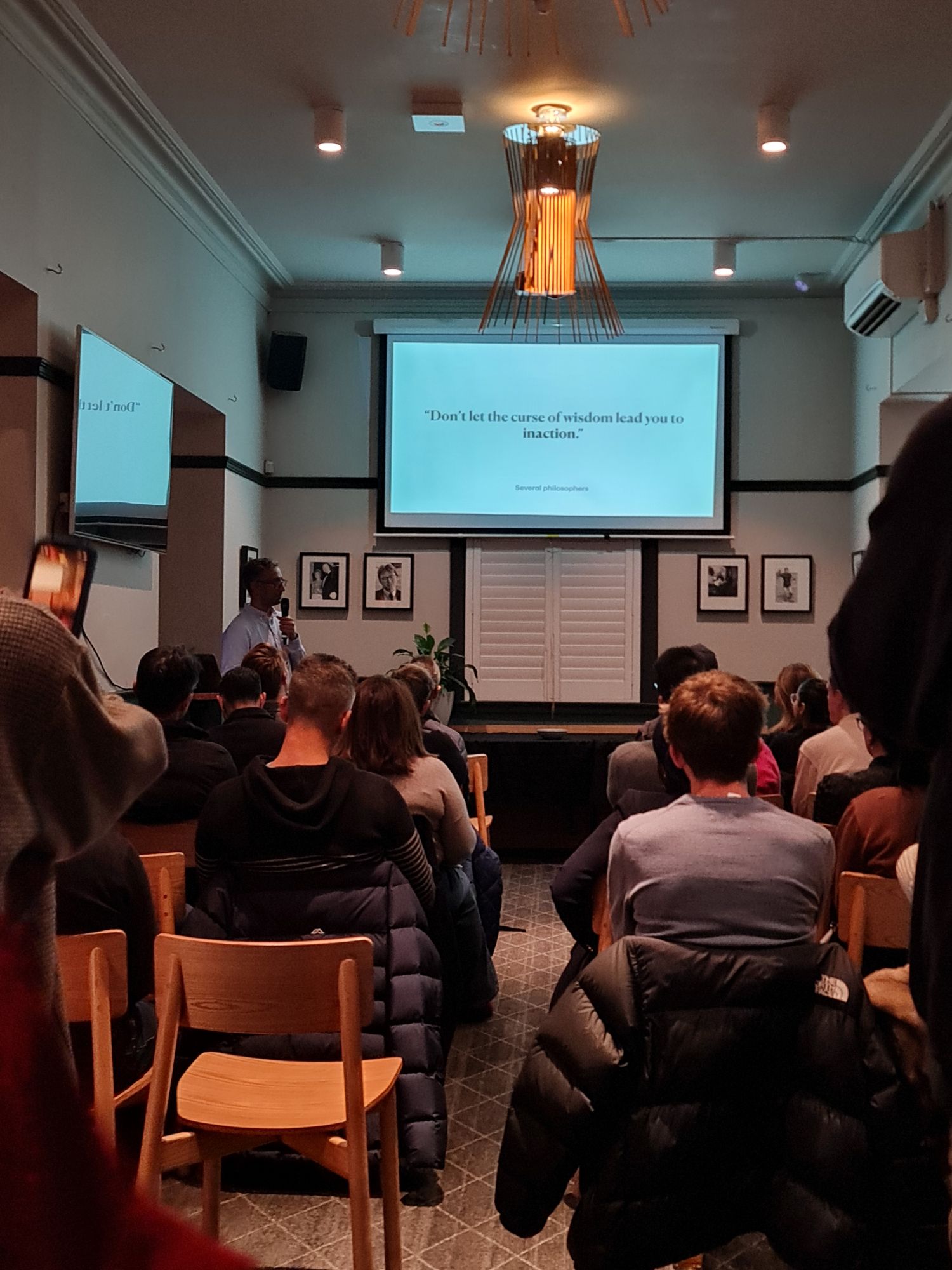
Questions to ponder:
- What is the gap between intention and reality?
- What is the simplest creation process?
- If creation is abundant, why should we create?
- Whom are we creating for?
- What drives us to consume?
- What informs our taste & judgement?
So how was Jithesh’s talk different to what ChatGPT gave me? Well it didn’t ask provoking questions – it told me things like ai is creating tools which make it easy to create and ‘execution is abundant‘ but that means judgment by humans is more important (which is shown in taste, trust & craft). Ai can generate many options but ‘taste’ which can recognise quality and what should not be built is important. It even pointed out that ‘in an ai world, trust becomes even more fragile‘ and users wonder if something is accurate or if it should be trusted with their data.
And it says with ai, all 3 of these things are more important since the average quality will fall as the cost of building is lower so a tasteful, well crafted, trustworthy product will be a competitive advantage. 🙂
My Product Companion- Zain Franciscus
Zain has been experimenting with various ai tools to help simplify his work & shared how he’s using several small Ai assistants.
Using Relevance Ai, Zain created 4 agents – a market researcher, persona strategist, prototype designer and product marketer. His experiment showed they were great for:
- Generating 1st drafts of time consuming items – like user documentation or user stories
- Uncovering blind spots – one agent suggested a value prop that Zain hadn’t considered
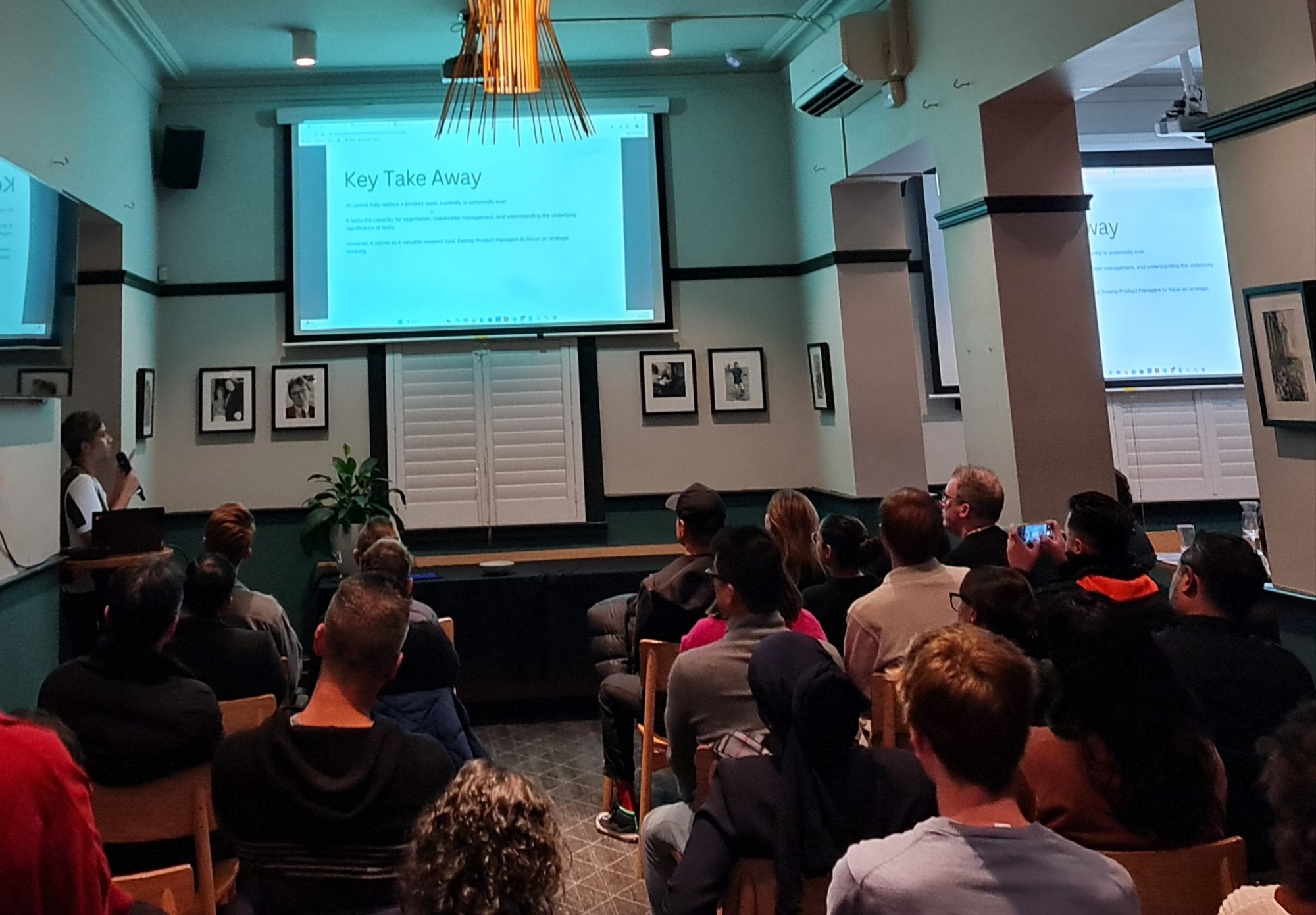
The big question – will the agents replace Product Managers? Zain doesn’t think so as there is a long way to go for the agents to be good at stakeholder management or negotiation or even understanding the significance of the tasks.
If you are going to investigate using agents, keep in mind
- Review everything because you still own the quality
- Use ai to shift time by off-loading things like formatting or writing so you can spend time on strategy and thinking and alignment.
- Start experimenting now. The tools are mature enough and the learning curve is worth it.
For more information, check out the talk Zain did at Product Camp (summary near the bottom of the page) and his posts about using the agents.